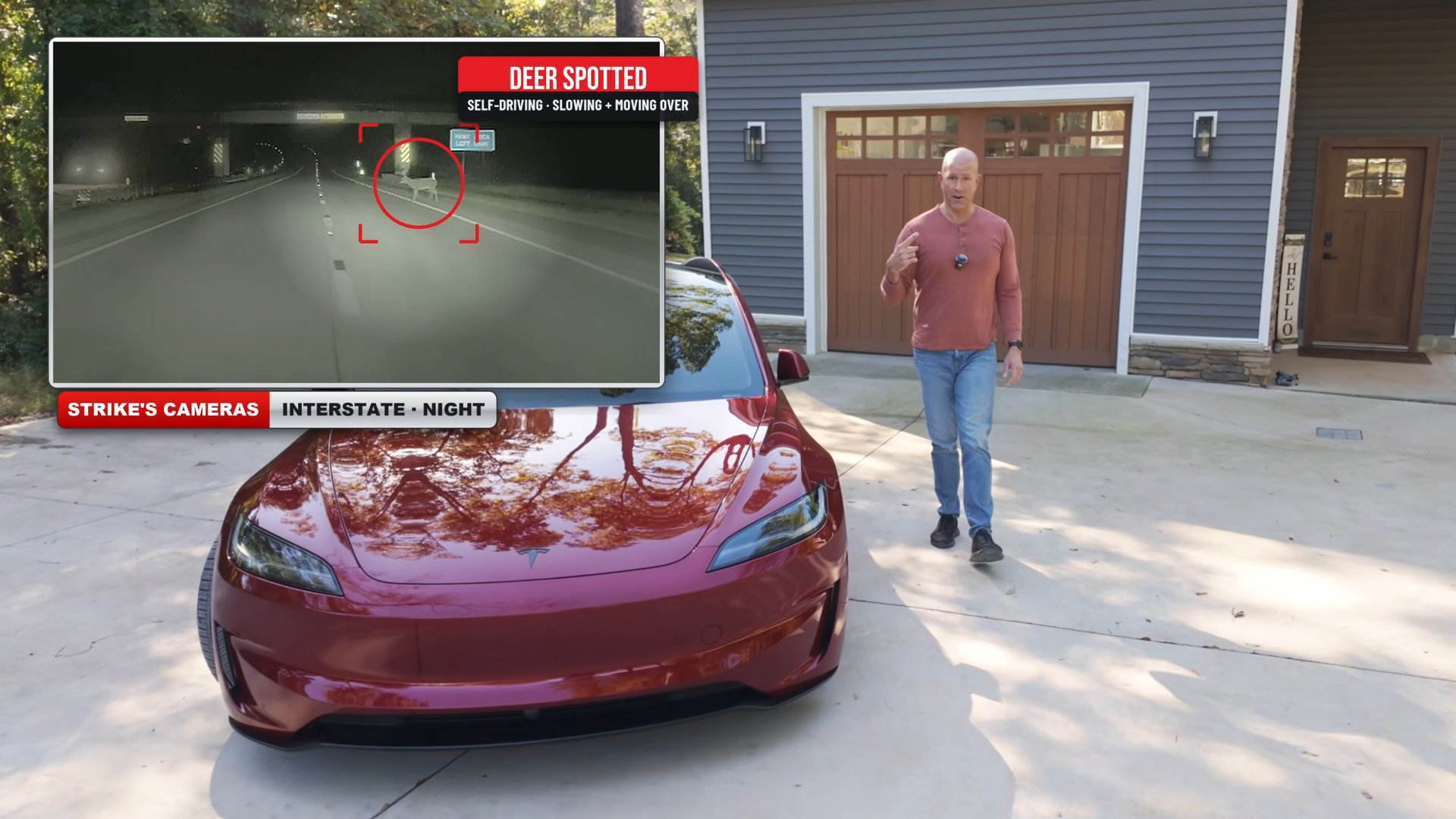
A while back we were on a dark interstate. No other traffic, no lights, nothing past the headlights. All of a sudden Strike, my 2026 Model 3 Performance, starts slowing down, puts the blinker on and starts moving over. Marianna looked at me and I was literally about to say "what in the heck is this thing doing".. and there it was. A deer, standing right on the white line with its head out in the interstate.
Strike saw it first.
The morning after that, it saw something else through some really bad sun glare. Something I completely missed. More on that one below.
It did all of this with nothing but cameras. No radar, no lidar, no ultrasonic sensors. Older Teslas actually had some of those, but Tesla stripped them all out.. ON PURPOSE.. and called it an upgrade. Sounds insane, I know. So let's dig into whether "cameras only" can really do the job.
Where all 9 cameras are
There are nine cameras total. One is in the cabin and watches you (that was Episode 3). The other eight are all looking out at the world around the car.
- Behind the windshield (I call it the Workhorse): two cameras. A wide angle for close stuff, like a traffic light you're sitting right under, and a long range one looking way down the road.
- Front bumper: a newer camera, and not every car has it. The Workhorse sits up high and can miss things right against the bumper, like a curb, a kid's bike or a small pet. This one fills that hole.
- B pillars (the post between the front and rear doors), both sides: these look forward and out, which is how the car can creep out of a blind intersection and see cross traffic, honestly before I can.
- Front fenders, both sides: these look backward down the sides of the car, covering your blind spots and helping with lane changes.
- Above the license plate: the rear camera.
Count them up and that's nine. That's the whole sensor package. 100% cameras.
What they actually see
You can see all of them yourself. Tap the car icon, then Service, scroll down to Camera Preview. The tiles on the screen pretty much mirror where each camera sits on the car, so it's really easy to tell which is which.
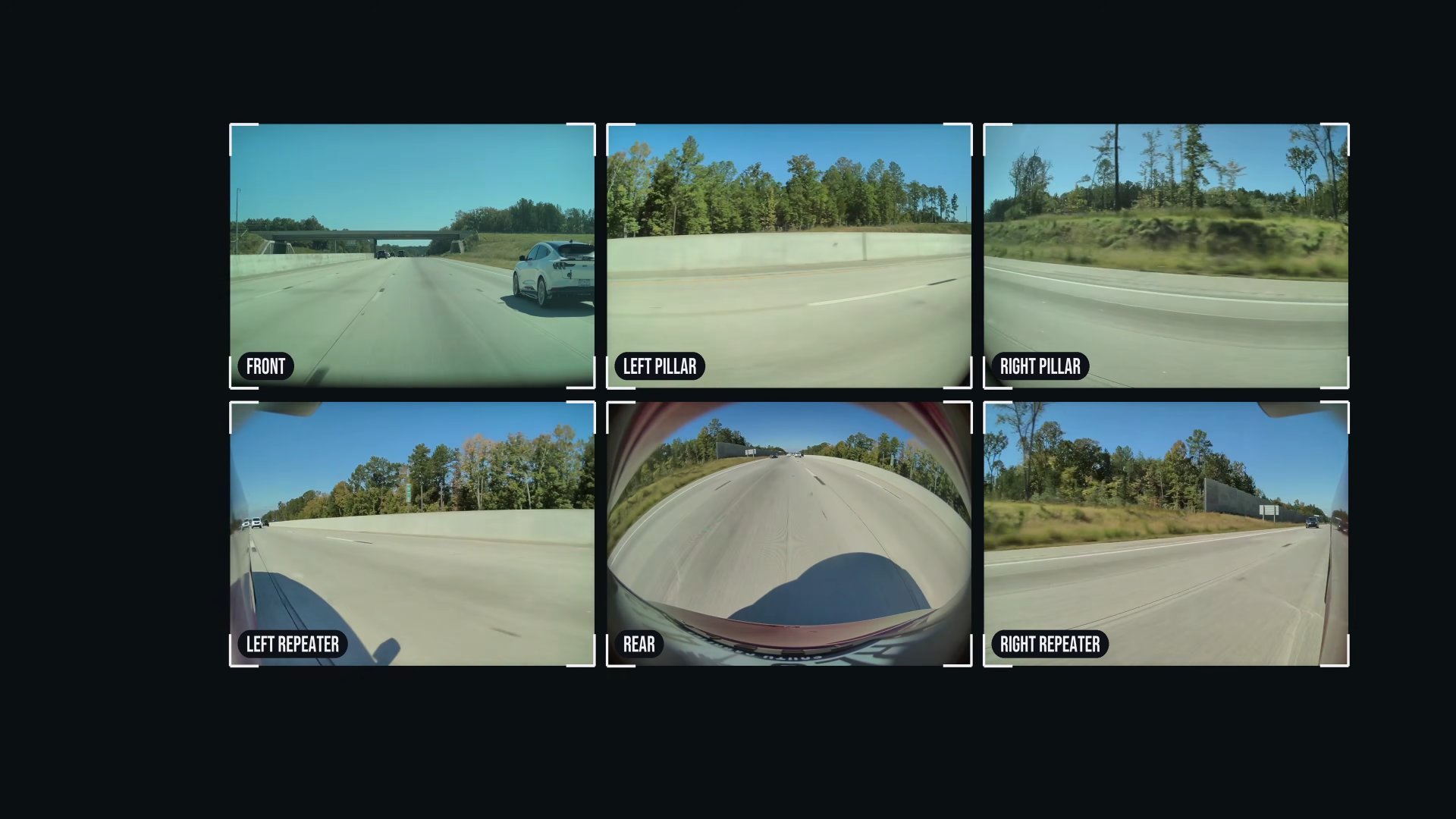
If you've never done this in your Tesla, go do it. You spend all day looking at that cartoon on the screen and it's actually really neat to see what that "cartoon" is built from. When I walked slowly around the car, there was barely a spot where I wasn't on a camera, and in some places I was on two or three at once.
As of a recent update you can pull the camera preview up while you drive, too. My favorite angle is the front bumper. It makes it look like you're riding in a go-kart going 200 miles an hour.
If you're wondering how I save all this footage from the car, that's Episode 4.1, and honestly it's something every owner should know.
Why Tesla went cameras only
Early Teslas had radar up front and those little ultrasonic sensor dots in the bumpers you've seen on every car for years. Pretty much every other self driving or auto steer system uses more than cameras. Starting in 2021, Tesla pulled it all out, radar first, then the ultrasonics, and what was left got branded "Tesla Vision".
The reason is actually pretty solid. Every road on earth was built for eyes. Every sign, traffic light, lane line and brake light is made for you and me to look at. Radar can tell you something is forty feet ahead, but it has no clue that it's a stop sign. So the bet is.. solve vision and you can drive anywhere a person can.
Then there's money. If you've ever seen a Waymo (the driverless taxis showing up in some cities), you know it. It has sensor pods on just about every panel. Estimates put that sensor package around ten to thirteen thousand dollars per car. Tesla's cameras are estimated at around four hundred. That's the whole bet in one number.
But you can't bet people's lives on a dollar amount, and cameras do have weaknesses.
When a camera can't see
The first one is dirt. Road grime or a bug splat can "blind" a camera. I wasn't going to smear bug guts on my car, so I put some painter's tape over one instead.
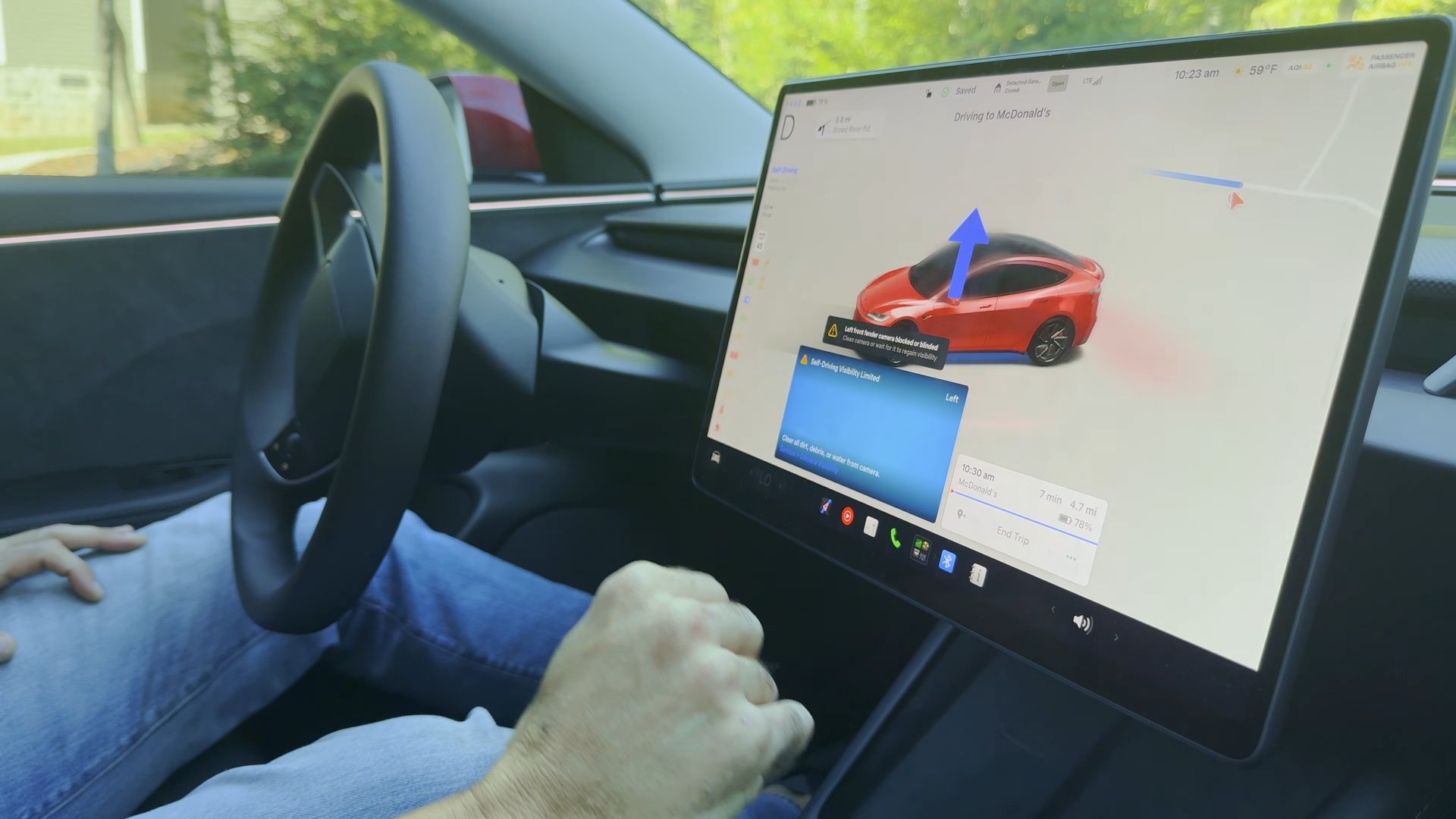
The car knew. It doesn't pretend it can see something it can't. It tells you loud and clear, and it can make you take over just as fast. That's one of the reasons FSD carries the "Supervised" tag. Hardware gets dirty or blocked and it's your turn.
To be fair, the old sensors had the same problem. A previous car I had with ultrasonic sensors would start yelling almost weekly in the South Carolina summer that I was too close to the car in front of me.. when nothing was there. Every time, "that car" was a June bug splattered all over the sensor.
The fix is the same too. Clean it. Tesla's own advice is a soft cloth and water. I keep an inexpensive eyeglass cleaning kit with lens safe spray and microfiber cloths in the center console, and for the cameras behind glass (the windshield and B pillars) I use Meguiar's Perfect Clarity, which I've used for years and leaves no haze. If you're in a winter climate, some cameras have heaters, but take a few extra seconds before a drive to check the ones that don't.
Sun glare and the fire trucks
The other one that gets a lot of headlines is sun glare. When the sun is low and dead ahead, it can wash out part of the camera picture.. same as it does for you and me. When that happens the car tells you, and if it's bad enough it may make you take over. Again, it's FSD.. SUPERVISED.
It's nowhere near as bad as some people make it out to be, though, for three reasons:
- Overlapping cameras. When the sun blinds you, you lean or drop the visor. With cameras in different spots, the car is basically doing that all the time.
- Better cameras. Newer cars like Strike have higher resolution cameras that handle bright and dark at the same time a lot better.
- The raw data (the nerdy one). The car doesn't use the pretty picture we look at. It reads the raw data straight off the camera sensor, which keeps detail in the super bright and super dark spots. You'll hear Tesla folks call this "photon count". It just means the computer sees way more of the image than we do.
A few mornings back I went out at dawn for one reason, to get sun glare footage. I hit a spot where the sun was dead in my eyes, coming up on a red light with traffic. No warnings from the car.. but it started acting really WEIRD. Almost lost. It stopped at an odd angle, pulled over a bit, with four or five car lengths between me and the car ahead.
Just as I started thinking "well, the glare got it".. I saw them. Two fire trucks pulling out at that light and coming my direction. No sirens, just their lights, which is why it took me a second to see what was going on with the sun in my eyes.
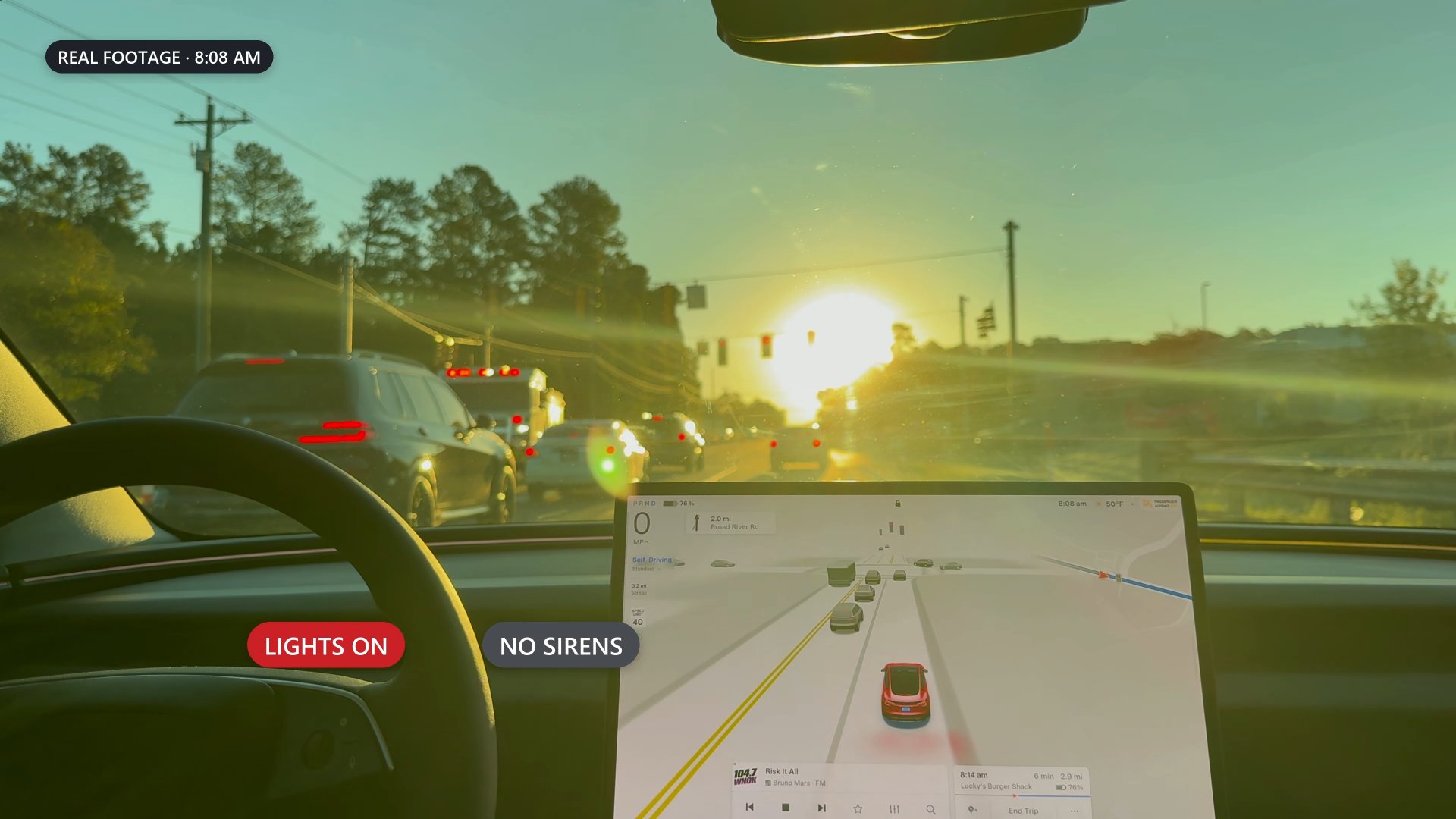
The car wasn't confused at all. It saw right through the glare and was doing its part to give those fire trucks the right of way.
That's an amazing story, but I can't tell you with a straight face that sun glare is solved. It isn't. I've personally had take-over messages that were 100% sun glare. They're very rare though, and it's getting better, fast.
So who's right?
Honestly, it seems like Tesla is, but there are plenty of naysayers. Radar goes straight through weather and lidar doesn't care about light at all, which is why Waymo and pretty much everyone else running driverless cars uses all three. They want the backup. Tesla's answer to backup is data: millions of cars sending back every weird situation they run into, and the system learning from it.
Here's where I land. If vision works, and from my seat it sure looks like it does, Tesla wins this on cost by twenty times or more.
One more personal observation. You know when you see traffic building up ahead and the guy in front of you taps his brakes just enough to light them up? In other cars I've driven with hands-free or lane assist systems, Marianna's Mach-E included, I've felt the car not respond to that at all, and it's actually really unnerving. In Strike, the second those brake lights come on, you can feel it getting ready for what might be next. Almost exactly how I would.
Marianna's take and Betty's paw rating
Marianna was in the car for the deer, so she gets her say in the video, including a lightning round of "which car would you pick" for different road conditions. Watch the video above for her answers.
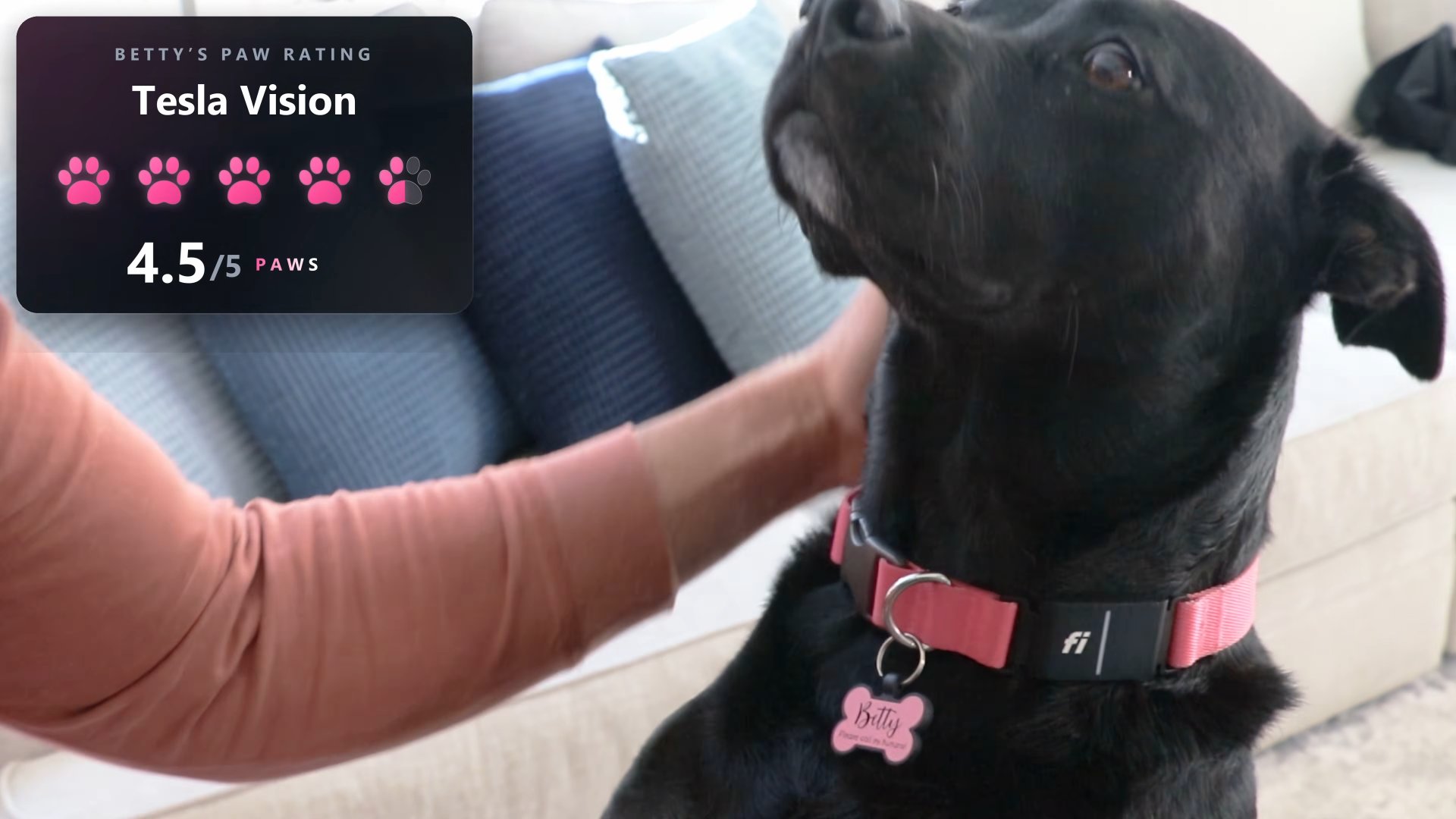
And the most important opinion in the house.. Betty. When I get home and she's outside, she sometimes forgets to be careful and comes running toward the car to greet me. With all the cameras, Strike can see her even when I can't. She gave it four and a half paws. She'd give it five, but she's still mad it won't let her drive on the actual road.
The short version
- Nine cameras, and you can watch all of them, even while you drive.
- Keep them clean.
- Glare is real, but nowhere near as bad as some make it out to be.
- The car tells you quickly when it can't see.
- Tesla's whole bet is that roads were built for eyes.. and the camera package costs about four hundred dollars a car.
FSD (Supervised) still needs you watching the road and ready to take over.
Stuff I actually use (from this post) Full honesty.. if you grab something through these links, I get a little kickback and it doesn't cost you a penny more. Thanks for helping the channel out! As an Amazon Associate I earn from qualifying purchases.
New here? The FSD series starts with Episode 1, "What Is Tesla FSD, Really?"